If you manage an apartment building, you already know the amenity problem. Prospective residents expect a gym, a package room, and a courtyard, so every building has them, and none of it is a reason to choose your building over the one down the street. The things residents actually mention are small and specific: the building where the kids have somewhere to go, the lobby that feels alive. A claw machine is a small, specific thing.
What a machine does for a building
We want to be straight about the scale of this. A claw machine will not raise your rents or fill a vacancy by itself. It is a modest amenity that does three useful things:
- It gives families a reason to use a common area. A clubhouse that is empty on weekday afternoons gets used when children have somewhere to go that is not their apartment.
- It shows up on tours. A leasing agent walking a family through the building has something to point to that is not a generic checklist, and a child who asks to play is a small piece of goodwill.
- It makes the building feel looked after. A machine that is kept stocked, clean, and working says something about how the rest of the property is run.
It is not equally useful everywhere. A building full of young families gets real use out of a machine. A building that is mostly single professionals or a quiet senior community will not, and we will tell you so rather than place a machine that sits unplayed.
Where it goes in a residential building
- The clubhouse or lounge, where children already congregate and the noise is expected. This is usually the best spot.
- The shared laundry room, if your building has one. It is the same logic as a laundromat: a forced wait on a recurring schedule, with kids tagging along. Check that the room is well lit and not a tight corridor.
- The lobby, with care. A lobby is the first thing guests and prospects see, so a machine here has to look good, but sound and crowds travel into the units above. A mini machine near the mail area can work.
- Not beside the elevators, a front door, or a ground-floor unit. Place it where a group of children gathering will not block movement or sit under someone’s window.
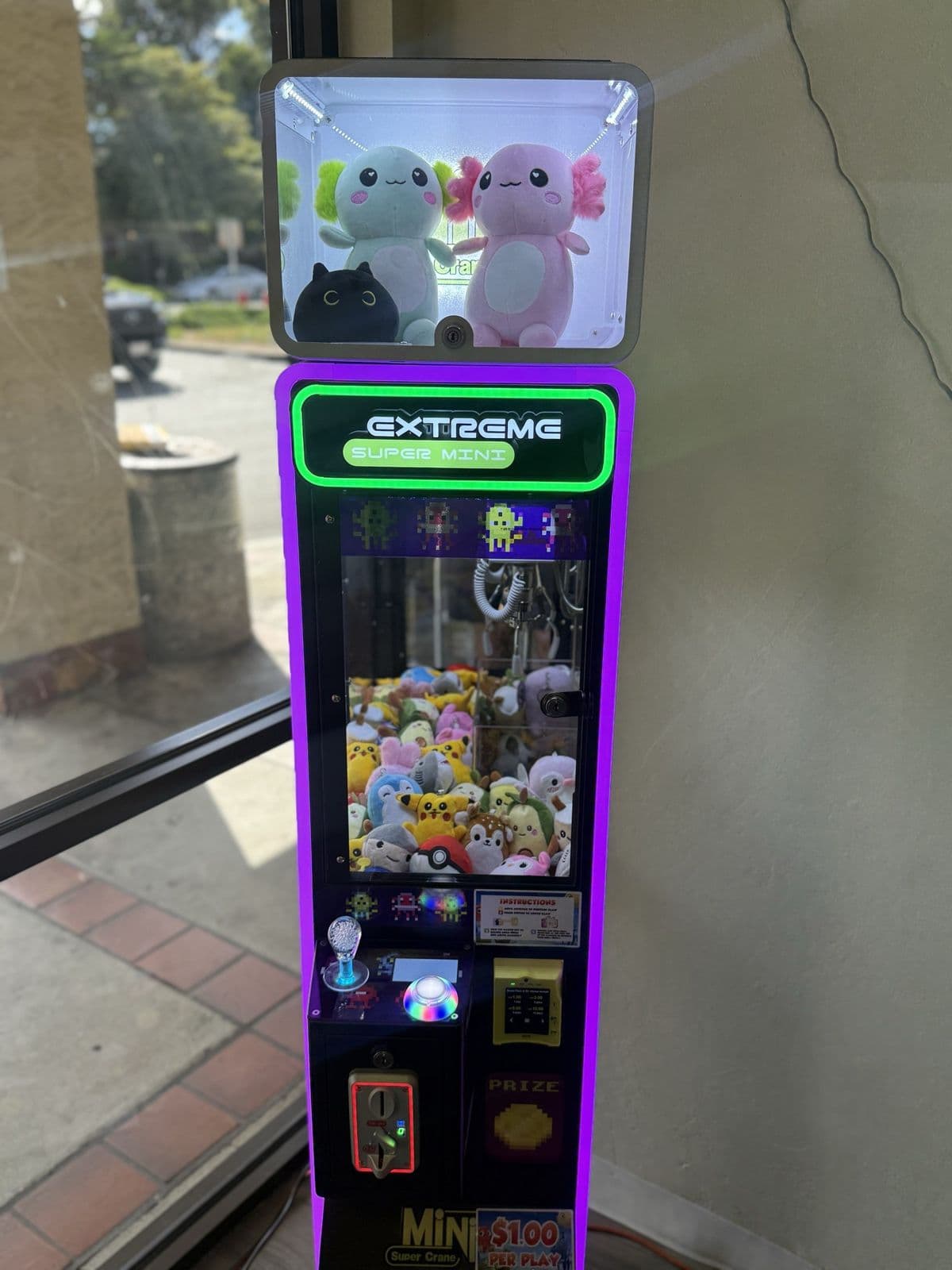
A standard machine needs about three by three feet and a few feet of clearance, plus a standard 110V outlet. A compact mini machine fits where a full cabinet will not, such as a corner of the package room.
The concerns a manager should raise
Noise and after-hours use
This is the one that generates complaints in a residential setting, and it deserves a real answer. Attract and play sounds are adjustable, and in a building we would normally set them low or off. For access, keep the common room on the same hours as the rest of your amenities so the machine is not drawing groups at midnight. If you already have trouble with after-hours gatherings in a common area, adding an attraction is not the fix.
Who supervises children
Residents’ children are residents’ responsibility, in the same way they are at your pool or your playground. A sign on the wall stating that children under a certain age must be accompanied is your decision to make and costs nothing. A machine placed within sight of the leasing office or a camera is easier to keep orderly.
Approval
If you manage on behalf of an owner, an HOA, or a board, a machine in a common area will likely need their sign-off. It helps to bring them the simple version: it costs the building nothing, and the machine is owned and maintained by someone else. We are glad to walk a board through the details.
Free-play or coin-play?
For a residential amenity, free-play is usually the right call. Charging residents to play a machine in their own building feels like an upsell at home, and the point is goodwill rather than income. Coin-play can work in a laundry room with heavy traffic, where the machine behaves more like it would in a commercial laundromat. Either way, the arrangement is explained up front, and you can change it later if the first choice is not working.
What it costs the building
Nothing. We own the machine, deliver and install it, repair it, and restock the prizes on our own schedule. Your on-site staff never opens it or orders anything. The one thing we will need is access: service visits have to be arranged with whoever controls the common room or the building doors, and the easiest way to handle that is to tell us who to call.
Where we place machines
We work with properties across San Francisco, Oakland and the East Bay, San Jose, San Mateo County, Marin County, Contra Costa County, and San Diego. Tell us about the building and we will say whether it is a fit.
Manage a building in the San Francisco Bay Area or San Diego? Tell us about your common areas and we will tell you honestly whether a machine fits.
Request a free machine